
From Statistics to Intelligence (for Class XI & XII)
From Statistics to Intelligence (for Class XI & XII)
Discover how numbers and data can help us understand the world, spot patterns, and make smarter decisions.
Course Instructor
Prof. Priyavrat Deshpande(CMI)
Prof. Rajeeva Karandikar (CMI)
Prof. Amritanshu Prasad (IMSc)
Prof. Sankaran Viswanath (IMSc)
Duration
8 Weeks
Course Fee
500
-
Interested?
Enroll in this Course
About The Course
The course will cover some interesting aspects of probability theory, statistics and data science with a focus on case studies of actual industry contexts where these find applications.
Course Instructor
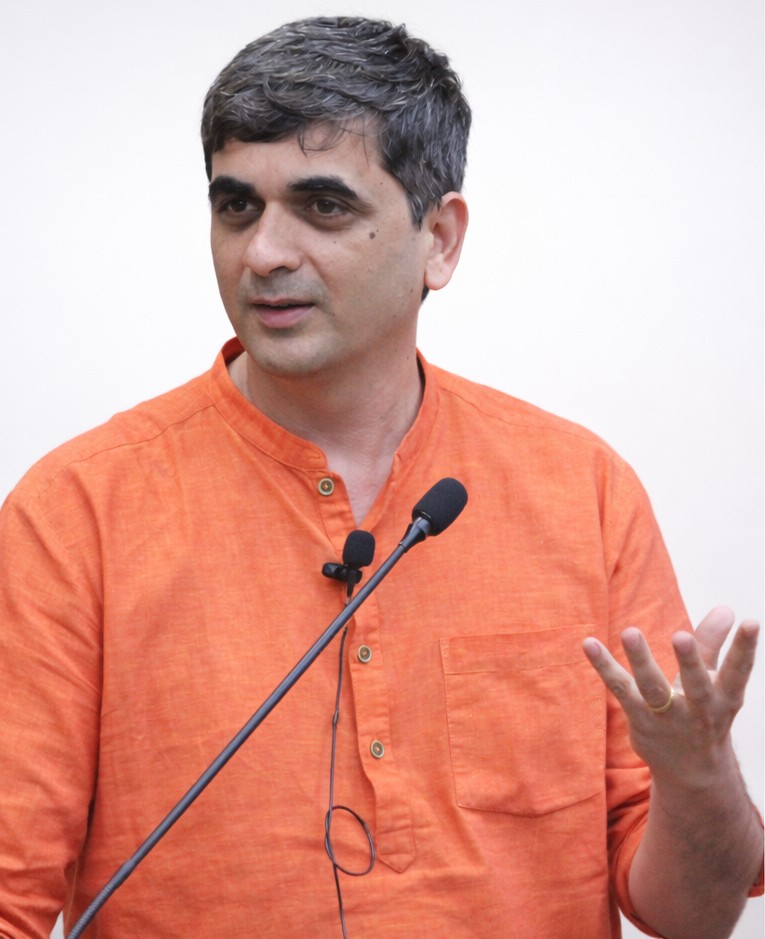
Prof. Priyavrat Deshpande(CMI)
Mathematician, Chennai Mathematical Institute (CMI).
Prof. Priyavrat Deshpande is a mathematician at CMI, who is closely involved in CMI's Data Science program and industry-academia interactions.
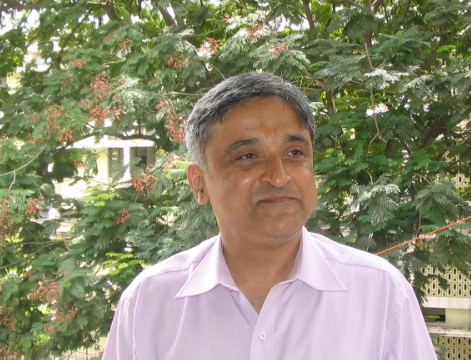
Prof. Rajeeva Karandikar (CMI)
Former Director, Chennai Mathematical Institute (CMI).
Prof. Rajeeva Karandikar is a former director of CMI, and has served on many national committees including the National Statistical Commission under the Ministry of Statistics and Program Implementation.
Prof. Amritanshu Prasad (IMSc)
Mathematician, Institute of Mathematical Sciences (IMSc).
Prof. Amritanshu Prasad is a mathematician at IMSc and has been closely associated with NPTEL and IITM Code through the various courses he has offered.

Prof. Sankaran Viswanath (IMSc)
Mathematician, Institute of Mathematical Sciences (IMSc).
Prof. Sankaran Viswanath is a mathematician at IMSc and has been closely associated with NPTEL and IITM Code through the various courses he has offered.
Content Overview
Course Duration: 8 Weeks
1. Chance, uncertainty, sample spaces, counting; What is randomness? Case Study: How 70% chance of rain tomorrow is actually produced.
2. Where data comes from: sampling, bias, survey question wording. Case Study: Indian election polling
3. Describing data: mean vs median vs mode, spread, percentiles, and charts that mislead
4. Why averages settle down: variation, law of large numbers, the bell curve. Case Study: Quality control on a factory line.
5. Conditioning on evidence: false positives, base rates, Bayesian analysis (gentle touch). Case Study: Medical screening tests, spam filters, banking and credit.
6. Relationships and prediction: scatter plots, correlation, a line of best fit.
7. From statistics to data science and AI: what learning from data means, train vs test, overfitting, where probability sits inside an LLM Case Study: Recommendation engines, autocomplete on phone keyboard
8. Doing this for a living: BS/BSc data science, CMI, ISI, IISc, IITM BS, actuarial science, economics, biostatistics — what each actually involves Case Study: Practitioner panel; a pollster, an actuary, an analyst etc.
Live Sessions: Weekly live interactive sessions on Saturdays
Course Eligibity
Students from any stream in Class XI & XII
Assessment Layout
Assignments: The course includes the release of 4 bi-weekly online assignments (every alternate week). Students need to attempt at least 3 of these assignments and must achieve a minimum score of 40 marks in each to be eligible for the certificate.
Take-Home Project: An optional project consisting of questions that cover all the topics from the theory videos, accompanied by a small project report.
Final Exam: An optional online final exam designed to assess the knowledge gained throughout the course, which can only be attempted after completing the required assignments with the a minimum score of 40 marks.
Certificate Acquisition
Participation Certificate - Check Sample Certificate
To receive this participation certificate, a student must pass 3 out of 4 assignments with an average score of at least 40 marks.Completion Certificate - Check Sample Certificate
To receive this completion certificate, a student must fulfill the following criteria:
- A student must pass 3 out of 4 assignments with an average score of at least 40 marks.
- Once the above condition is satisfied, the student should attempt the final exam and must receive a minimum score of 40 marks.
Take Home Project Certificate - Check Sample Certificate
To receive this additional certificate, a student must submit the project. A separate e-certificate will be awarded based on the course instructors' evaluation and feedback on the submitted project.