
Introduction to Forensic Sciences - I (For Classes IX & X)
Introduction to Forensic Sciences - I (For Classes IX & X)
Ever wondered how forensic scientists solve cases? Explore fingerprints, DNA, handwriting, digital evidence, and more through fun, hands-on investigations.
Course Instructor
Dr. Deepak J. Mashru, NFSU
Duration
8 Weeks
Course Fee
500
-
Interested?
Enroll in this Course
About The Course
Forensic science is the most-watched and least-understood subject in India. Almost every school student has seen an investigation dramatised on screen. Very few know that it is a degree, a career, a government service, and, at present, one of the fastest-growing skill shortages in the country.
Introduction to Forensic Sciences - I is an eight-week course that takes learners of Standard IX and X across the whole map of forensic science, one domain a week, in plain language. Every week, four podcast episodes in which working forensic scientists are interviewed about what they do. There are no lectures in the course.
Every week also has something to do with your hands: lift and classify your own fingerprints, extract visible DNA from a strawberry in your kitchen, identify an anonymous writer from handwriting, test whether a video has been manipulated, check kitchen staples for adulteration, estimate a person's height from one bone measurement. Every Saturday, there is an additional live hour to argue about what you found.
Running underneath, the whole course is Case Zero, a single investigation that released one clue at a time. You get the next clue only when you finish the week's activity. No prerequisite beyond curiosity, no laboratory required, and every activity is safe at a kitchen table.
Course Instructor
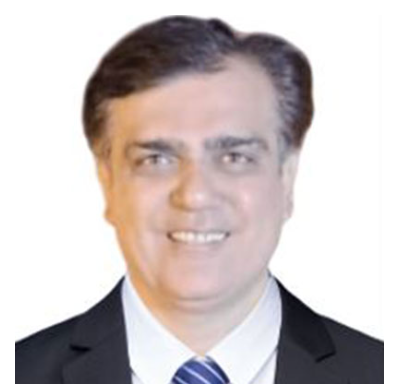
Dr. Deepak J. Mashru, NFSU
Professor, National Forensic Sciences University, Gandhinagar.
Dr. Deepak J. Mashru, Associate Dean, School of Open Learning, and Assistant Professor of English at the School of Law, Forensic Justice and Policy Studies, NFSU Gandhinagar (Institution of National Importance, Ministry of Home Affairs, Government of India), is the first English Language Professor in India notified as a Government Scientific Expert under Section 329 of BNSS 2023, with forensic linguistic reports admissible in courts. A pioneer of forensic linguistics, he created India’s first certificate courses on SWAYAM–NPTEL (IIT Madras) and the MHA School of Open Learning. His research spans authorship attribution, misinformation detection, protest graffiti, and computational linguistics, integrating Panini’s grammar, Bhartrhari’s semantics, and Nyaya–Mimamsa epistemology into forensic science. Holding a Ph.D. in Applied Linguistics and multiple degrees across English, Commerce, Journalism, Education, and Computer Application, he combines interdisciplinary teaching with international certifications (TESOL/TEFL UK, Cambridge EdTech, Adobe Innovative Teacher). Author of 14 books, including From IDK to OMG and The Z Code, he also holds two Guinness World Records for landmark participatory education events. He directs a ₹2 crore ICSSR project embedding Bharatiya Knowledge Systems into higher education, has published 22 indexed papers, 20 chapters, and 14 books, and holds patents in AI-enabled pedagogy. Honoured with Best Teacher Awards, a TEDx speaker, and recognized as a national academic voice, Dr. Mashru advances forensic linguistics as a formal science, uniting language, law, and technology in the pursuit of justice.
Content Overview
Course Duration: 8 Weeks
Week 1: Every Contact Leaves a Trace
- What Forensic Science Actually Is, and What It Is Not
- The First Fifteen Minutes: A Crime Scene Officer's Account
- Building Your Locard Log
- -The Crime Scene Officer: One Job, Explained
Week 2: Your Original Password
- Loops, Whorls and Arches: The Grammar of a Fingerprint
- The Calcutta Bureau: How India Gave the World Fingerprint Classification
- Lifting and Classifying Your Own Ten Prints
- The Fingerprint Examiner: One Job, Explained
Week 3: The Scene Is a Group Project
- Securing, Searching and Recording a Scene
- The Case That Turned on a Single Fibre
- Photographing and Sketching a Scene in a Shoebox
- The Trace Evidence Analyst: One Job, Explained
Week 4: The Body Keeps Receipts
- From Blood Groups to Barcodes: How DNA Identifies a Person
- The Exculpatory Case: When the Science Freed Somebody
- Extracting DNA on Your Kitchen Table
- The DNA Analyst: One Job, Explained
Week 5: Your Handwriting Snitches
- Forgery, Line Quality, and Why Graphology Is Not Science
- Reading a Threat Message: A Forensic Linguist at Work
- Whodunit Wrote It: Comparison and Ink Chromatography
- The Document Examiner and Forensic Linguist: One Job, Explained
Week 6: Caught in 4K
- Metadata, Deleted Files and the Myth of Vanishing Evidence
- Inside a Device Examination, and the Frauds Aimed at Teenagers
- Running the Delulu Detector on Five Media Files
- The Cyber Forensic Analyst: One Job, Explained
Week 7: The Dose Makes the Poison
- Why Quantity, Not Substance, Decides a Poison
- Inside the Instrument Room: The Adulteration Work Nobody Hears About
- Testing Turmeric and Milk in Your Own Kitchen
- The Forensic Chemist and Toxicologist: One Job, Explained
Week 8: Bones, Bugs, Bites and Beasts
- What a Skeleton, an Insect and a Pollen Grain Can Tell You
- Prosecuting a Trafficking Case on the Strength of a Single Scale
- Bone Detective: Estimating Height and Measuring Your Error
- The Wildlife Forensic Scientist and Anthropologist: One Job, Explained
Live Sessions: Weekly live interactive sessions on Saturdays
Course Eligibity
Students from any stream in Class IX & X
Assessment Layout
Assignments: The course includes the release of 4 bi-weekly online assignments (every alternate week). Students need to attempt at least 3 of these assignments and must achieve a minimum score of 40 marks in each to be eligible for the certificate.
Take-Home Project: An optional project consisting of questions that cover all the topics from the theory videos, accompanied by a small project report.
Final Exam: An optional online final exam designed to assess the knowledge gained throughout the course, which can only be attempted after completing the required assignments with the a minimum score of 40 marks.
Certificate Acquisition
Participation Certificate - Check Sample Certificate
To receive this participation certificate, a student must pass 3 out of 4 assignments with an average score of at least 40 marks.Completion Certificate - Check Sample Certificate
To receive this completion certificate, a student must fulfill the following criteria:
- A student must pass 3 out of 4 assignments with an average score of at least 40 marks.
- Once the above condition is satisfied, the student should attempt the final exam and must receive a minimum score of 40 marks.
Take Home Project Certificate - Check Sample Certificate
To receive this additional certificate, a student must submit the project. A separate e-certificate will be awarded based on the course instructors' evaluation and feedback on the submitted project.