
Introduction to Forensic Sciences - II (For Classes XI & XII)
Introduction to Forensic Sciences - II (For Classes XI & XII)
Wondering where forensic science can take you? Meet professionals, explore real career pathways, understand subject and entrance requirements, and create a roadmap for your future.
Course Instructor
Dr. Deepak J. Mashru, NFSU
Duration
8 Weeks
Course Fee
500
-
Interested?
Enroll in this Course
About The Course
Standard XI and XII learners do not need to be told that forensic science is interesting. They need to be told what the job is, who does it, what you study to get there, and which subject combination opens or closes each door. That is what this course is. Introduction to Forensic Sciences - II runs for eight weeks and takes a career family a week. Every week is delivered as four podcast episodes in which a working professional from that family is interviewed about what they actually do all day, the case that defined their career, how they got in, and what they wish somebody had told them at seventeen. There are no lectures in the course. Between episodes, the learner does the work. Not a simulation of the science, but a simulation of the job: shadow and profile a practitioner, reconstruct how three disciplines contributed to one real case, write and then defend an expert opinion under cross-examination, and finally build an evidence-based blueprint for your own pathway with subjects, institutions, entrance timelines and a five-year map. An additional live hour every Saturday is where blueprints are challenged and defended. Learners finish with a document they will still be using two years later, and with a decision they can actually defend.
Course Instructor
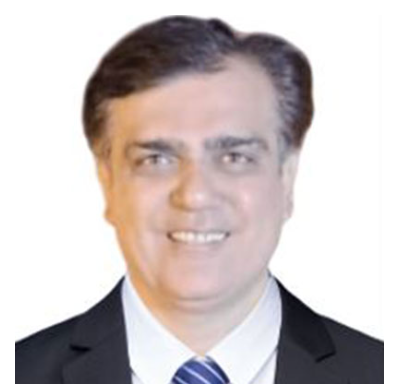
Dr. Deepak J. Mashru, NFSU
Professor, National Forensic Sciences University, Gandhinagar.
Dr. Deepak J. Mashru, Associate Dean, School of Open Learning, and Assistant Professor of English at the School of Law, Forensic Justice and Policy Studies, NFSU Gandhinagar (Institution of National Importance, Ministry of Home Affairs, Government of India), is the first English Language Professor in India notified as a Government Scientific Expert under Section 329 of BNSS 2023, with forensic linguistic reports admissible in courts. A pioneer of forensic linguistics, he created India’s first certificate courses on SWAYAM–NPTEL (IIT Madras) and the MHA School of Open Learning. His research spans authorship attribution, misinformation detection, protest graffiti, and computational linguistics, integrating Panini’s grammar, Bhartrhari’s semantics, and Nyaya–Mimamsa epistemology into forensic science. Holding a Ph.D. in Applied Linguistics and multiple degrees across English, Commerce, Journalism, Education, and Computer Application, he combines interdisciplinary teaching with international certifications (TESOL/TEFL UK, Cambridge EdTech, Adobe Innovative Teacher). Author of 14 books, including From IDK to OMG and The Z Code, he also holds two Guinness World Records for landmark participatory education events. He directs a ₹2 crore ICSSR project embedding Bharatiya Knowledge Systems into higher education, has published 22 indexed papers, 20 chapters, and 14 books, and holds patents in AI-enabled pedagogy. Honoured with Best Teacher Awards, a TEDx speaker, and recognized as a national academic voice, Dr. Mashru advances forensic linguistics as a formal science, uniting language, law, and technology in the pursuit of justice.
Content Overview
Course Duration: 8 Weeks
Week 1: What the Job Actually Is
- The Forensic Ecosystem and the Expert's Duty to the Court
- How the Profession Changed When Forensic Visits Became Law
- Mapping Three Roles to Their Real Qualification Routes
- Twelve Role Families, Twelve Subject Decisions
Week 2: The Laboratory Sciences Path
- The Instrument Shelf: What Each Machine Actually Answers
- Two Laboratory Careers: A Forensic Chemist and a Ballistics Expert
- Reading a Chromatogram and Writing the Finding
- Getting In: Degrees, Entrance Tests and What Selectors Look For
Week 3: The Biological Sciences Path
- From Swab to Profile: Inside a DNA Laboratory
- Disaster Victim Identification and the Wildlife Casework
- Reading an Electropherogram and Stating the Honest Caution
- Getting In: The Postgraduate Step Most Learners Miss
Week 4: The Medicine and Behaviour Path
- Cause, Manner and Mechanism: What a Body Can Establish
- What Forensic Psychology Is, and What Television Is Not
- Building a Biological Profile and Knowing What to Refuse
- Getting In: Medicine, Nursing, Odontology, Anthropology and Psychology
Week 5: The Digital and Cyber Path
- Imaging, Hashing and Why You Never Work on the Original
- The Device That Broke a Case, and the Money Trail That Followed
- Verifying an Acquisition and Recording the Chain of Custody
- Getting In: The Cyber Routes That Do Not Need an Engineering Degree
Week 6: The Language, Documents and Law Path
- Idiolect, Authorship and the Multilingual Indian Problem
- The Forged Will and the Ransom Note
- Writing an Authorship Opinion, Limits Included
- Getting In: Forensic Careers from a Humanities Stream
Week 7: The Management, Finance and Governance Path
- Following the Money: Forensic Accounting and Fraud Examination
- The Fraud That Was Found in a Spreadsheet
- Finding the Transaction That Does Not Belong
- Getting In: Forensic Routes from Commerce and Arts
Week 8: Building Your Pathway
- The Stream and Subject Map, Domain by Domain
- An Admissions and Alumni Panel Answers the Questions
- Presenting and Defending Your Career Blueprint
- Eligibility, Calendars and Making the Decision
Live Sessions: Weekly live interactive sessions on Saturdays
Course Eligibity
Students from any stream in Class XI & XII
Assessment Layout
Assignments: The course includes the release of 4 bi-weekly online assignments (every alternate week). Students need to attempt at least 3 of these assignments and must achieve a minimum score of 40 marks in each to be eligible for the certificate.
Take-Home Project: An optional project consisting of questions that cover all the topics from the theory videos, accompanied by a small project report.
Final Exam: An optional online final exam designed to assess the knowledge gained throughout the course, which can only be attempted after completing the required assignments with the a minimum score of 40 marks.
Certificate Acquisition
Participation Certificate - Check Sample Certificate
To receive this participation certificate, a student must pass 3 out of 4 assignments with an average score of at least 40 marks.Completion Certificate - Check Sample Certificate
To receive this completion certificate, a student must fulfill the following criteria:
- A student must pass 3 out of 4 assignments with an average score of at least 40 marks.
- Once the above condition is satisfied, the student should attempt the final exam and must receive a minimum score of 40 marks.
Take Home Project Certificate - Check Sample Certificate
To receive this additional certificate, a student must submit the project. A separate e-certificate will be awarded based on the course instructors' evaluation and feedback on the submitted project.